CHILDREN'S MENTAL HEALTH · North Narrabeen
Play Therapy
Young children naturally communicate and process their inner world through play.

“Play therapy is based upon the fact that play is the child's natural medium of self-expression. It is an opportunity which is given to the child to ‘play out’ his feelings and problems just as, in certain types of adult therapy, an individual ‘talks out’ his difficulties.” (Virginia Axline, 1947)
Child-centred play therapy (CCPT) is a psychotherapy approach for children where the relationship between the child and the therapist is the foundation for therapeutic change.
When a child is experiencing emotional, behavioural, social or relationship difficulties, CCPT offers a developmentally sensitive way to learn, heal and grow through self-directed exploration within a safe relationship.
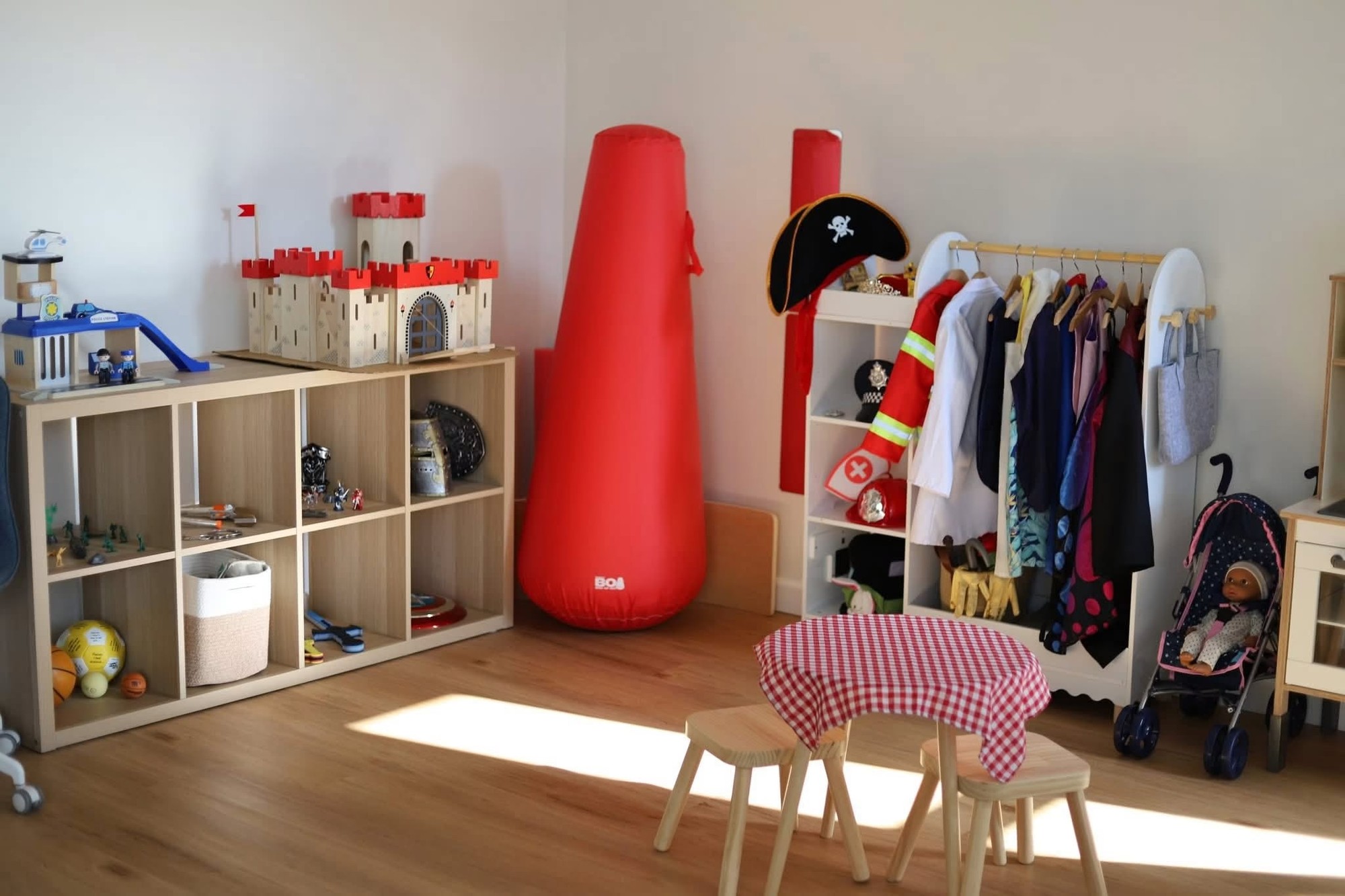
In play therapy, the child uses the whole self —mind and body— to express unconscious thoughts, wishes, fears, anxieties and so forth. This helps them process emotions and thoughts. Through such play, the therapist gains an understanding of the child’s needs and experiences without asking questions.
Therapists are trained to read the metaphors of the play (themes) and observe emerging patterns. These observations help the clinician to reflect thoughts and feelings back to the child, thus addressing the underlying sources of challenges and allowing the child to gain insight into their own behaviours.
As internal growth increases, behavioural symptoms decrease. This leads to a stronger person (resilience and inner strength), more able to tolerate triggers and changes. The effects are progressively noticed in the child’s daily functioning.
The therapeutic relationship
The therapist builds an unconditional relationship within a warm, safe and predictable environment. This special connection is healing for the child.
Trauma-informed approach
There are various types of play therapy, which are grounded on different theoretical models. CCPT is a humanistic intervention and the most non-directive of all modalities.
CCPT has been proved to be one of the most effective approaches for ages 3 to 10. Its positive outcomes are supported by over 80 years of research and evidence-based reviews.